What Is Billet Aluminum?
Billet aluminum is a solid block or bar of wrought aluminum, extruded or rolled from a cast ingot and then cut to length. Parts described as billet are machined from this solid stock rather than poured into a mold (cast) or hammered into shape (forged). The billet process gives consistent grain structure and predictable machining behavior.
Strictly speaking, billet describes a form of raw stock, not a magic material. Aluminum starts as molten metal poured into large cast ingots. Those ingots are then extruded or hot-rolled into bars, rounds, and plates, a process that compresses the metal, refines its grain structure, and eliminates most of the internal voids that casting leaves behind. Cut that wrought bar into workpiece-sized blocks and you have billets.
When a manufacturer says a part is billet, they mean it was machined from that solid wrought stock. All the material that is not the part gets cut away as chips. This is subtractive manufacturing in its purest form, and it is why billet parts carry both a quality reputation and a cost premium: the process wastes material but produces parts with uniform, dense, void-free internal structure.
The quality halo around billet is mostly deserved but often oversold. A properly designed cast part can outperform a poorly designed billet part. What billet reliably delivers is consistency: no porosity surprises, no hidden voids, predictable strength in every direction the extrusion allows, and dimensional stability during machining.
Billet vs Cast vs Forged Aluminum: The Real Differences
3 production routes turn raw aluminum into finished parts, and each leaves a distinct fingerprint in the metal. The table below compares them across the factors that matter for part performance and machining.
| कारक | Billet (Machined) | जात | बिर्सियो |
|---|---|---|---|
| यो कसरी बनाइन्छ? | Machined from solid wrought bar or plate | Molten metal poured into a mold | Heated blank hammered or pressed into shape |
| आन्तरिक संरचना | Uniform, dense, void-free | Porosity and shrinkage voids possible | Densest; grain flows follow part shape |
| बल | उच्च र एकरूप | Lowest of the three; varies with casting quality | Highest, especially fatigue strength |
| डिजाइन स्वतन्त्रता | उपकरण पहुँच द्वारा सीमित | Highest; complex internal shapes possible | Limited; simple robust shapes |
| उपकरण लागत | None (just fixturing) | High (mold cost) amortized over volume | Highest (die cost) for large volumes |
| सबैभन्दा राम्रो भोल्युम | 1 to hundreds | Hundreds to millions | हजारौं देखि लाखौं सम्म |
| सामान्य भागहरू | Prototypes, custom brackets, performance parts | Engine blocks, housings, wheels (cast) | Suspension arms, aircraft fittings, crankshafts |
| Surface finish off process | Machined finish, Ra 1.6 or better | As-cast rough; machined where needed | Forged skin; machined at interfaces |
The practical decision rule: casting wins at high volume where mold cost amortizes and complex geometry matters. Forging wins where fatigue strength is life-critical. Billet wins for prototypes, low-volume custom work, and any part where a hobbyist or job shop needs full strength today without tooling investment. That last case is exactly where CNC mills and aluminum-capable routers live.
6061 vs 7075: The 2 Grades That Matter
Walk into any metal supplier and 2 wrought alloys dominate the billet racks: 6061 and 7075. Per Aluminum Association data, the 6000 and 7000 series lead CNC machining use, and for most shops the choice narrows to these two.
| सम्पत्ति | 6061-T6 (the workhorse) | 7075-T6 (aerospace grade) |
|---|---|---|
| तन्यता बल | ~६२० MPa (९० ksi) | ~572 MPa (83 ksi), roughly double |
| कठोरता (ब्रिनेल) | ~ 95 | ~ 150 |
| जंग प्रतिरोध | Excellent; anodizes uniformly | Fair; usually anodized or coated for protection |
| वेल्डबिलिटी | Good with standard processes | Poor; welding not recommended |
| मशीनिन | Very good; slightly gummy chips | Very good; harder, chips break cleaner |
| सतह समाप्त | Good; consistent anodizing color | Brighter machined finish; anodize color varies |
| सापेक्षिक लागत | बेसलाइन | Roughly 2x per pound (real-world quotes: ~$38 vs ~$101 per equivalent bar) |
| सर्वश्रेष्ठका लागी | Brackets, fixtures, enclosures, general parts | High-stress structural parts, aerospace, racing |
What the spec sheets miss is how similar the 2 feel at the machine. Practical Machinist members who cut both daily report using identical programs and tooling, with 7075 leaving a noticeably brighter finish and breaking chips more easily while wearing carbide edges slightly faster. One member summarized the community consensus: either one cuts like butter. Hobby-Machinist forum users echo it: same feeds and speeds as 6061, do not be afraid of 7075.
The real decision drivers are cost and application, not machinability. Pay double for 7075 when the part genuinely needs the strength: load-bearing brackets, suspension components, high-stress fixtures. Use 6061 for everything else, and get better anodizing consistency and weldability as a bonus.
What Does T6 Mean? Tempers in Plain Language
The letters after the alloy number describe the temper, the heat-treatment state that sets final strength. For billet buyers, 3 designations cover nearly everything on the rack.
✓ T6: Solution heat-treated and artificially aged. The standard full-strength temper for both 6061 and 7075. If a listing just says 6061 or 7075 without a temper, assume T6 but confirm before buying for structural work.
✓ T651: T6 plus a controlled stretch that relieves internal stress. Matters for plate stock: T651 plate stays flatter during machining because the residual stresses that cause warping have been pulled out. Worth the small premium for parts with large pocketed areas.
✓ O (annealed): Soft, dead-annealed condition. Easy to bend, terrible to machine (extremely gummy), and weak. Avoid for machined parts unless you plan to form 1st and heat-treat after.
The stress-relief point deserves emphasis for anyone machining thick plate. Cutting deep pockets in non-stress-relieved stock releases locked-in stresses, and the part can bow visibly as material comes off. T651 plate exists specifically to prevent that. For thin parts and small brackets, standard T6 bar is fine.
Machining Billet Aluminum: Feeds and Speeds Basics
Aluminum is the most forgiving metal to machine, which is exactly why it is the right 1st metal for hobbyists stepping up from wood and plastics. The numbers below are consensus starting points drawn from current industry cutting charts and machinist forum practice. Treat them as first-pass ranges, then tune by listening to the cut.
| प्यारामिटर | 6061-T6 Starting Point | 7075-T6 Starting Point |
|---|---|---|
| Surface speed (carbide) | 800 to 1,000 SFM roughing | 600 to 900 SFM (10 to 20% lower) |
| Chip load, 1/4 inch end mill | 0.002 to 0.004 IPT | 0.002 to 0.004 IPT (similar) |
| Chip load, 1/2 inch end mill | 0.003 to 0.006 IPT | 0.003 to 0.006 IPT (similar) |
| बाँसुरी गणना | 2 or 3 flute for chip clearance | 2 or 3 flute; chips break easier |
| उपकरण कोटिंग | Uncoated or ZrN (never TiAlN) | Uncoated or ZrN (never TiAlN) |
| Coolant / lubrication | Mist or flood; prevents built-up edge | Same; heat management matters slightly more |
3 rules carry more w8 than any chart. First, chip load is king: too light a chip and the tool rubs instead of cuts, building heat and welding aluminum to the cutting edge (built-up edge, the number one aluminum finish killer). Second, get chips out of the cut: recutting chips ruins finishes and breaks tools, which is why 2 and 3 flute end mills with big gullets dominate aluminum work. Third, never use TiAlN-coated tools on aluminum: the coating contains aluminum and chemically galls to the workpiece.
A Worked Example for Hobby Machines
Practical rig: a hobby mill or aluminum-capable router with a 4,200 RPM spindle and a 1/2 inch 3-flute carbide end mill in 6061. A Hobby-Machinist member running exactly this setup reports 30 to 40 IPM at about 0.005 inch chip load per tooth with 3 HP available. That is the character of aluminum machining on modest machines: moderate RPM, honest chip loads, and rigid workholding beat chasing big-shop surface speeds.
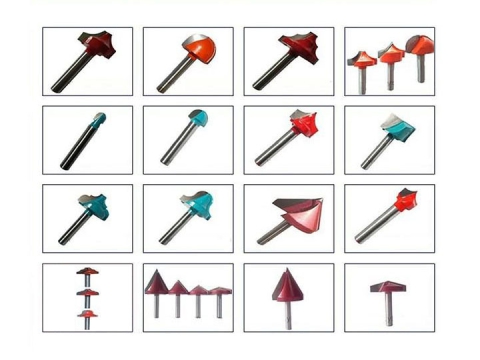
High-RPM routers flip the math. A 10,000 to 24,000 RPM router spindle cannot slow down enough for large cutters, so aluminum router work favors small single-flute and 2-flute end mills (1/8 लाई 1/4 inch) run fast with aggressive feed to maintain chip load. Single-flute aluminum bits exist precisely for this: one big gullet clears chips at router speeds where multi-flute tools clog.
What Machine Do You Need for Billet Aluminum?
Billet aluminum is within reach of far more machines than beginners assume. The requirement is rigidity and chip management, not raw power. 3 machine classes cover the hobbyist-to-shop spectrum.
Desktop and hobby CNC mills. Purpose-built for metal, with rigid iron frames and low-RPM high-torque spindles that suit larger cutters. The धातुको लागि शौक CNC मिलिङ मेसिन र desktop small CNC milling machine class handles brackets, enclosures, and small billet parts in both 6061 and 7075. This is the natural 1st metal machine.
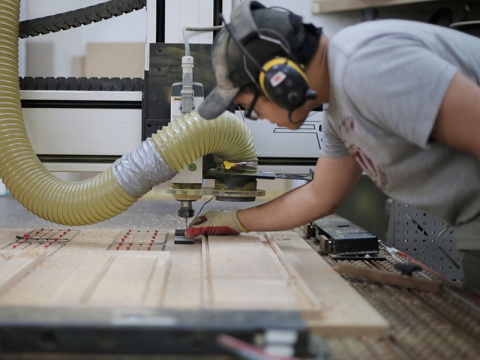
Aluminum-capable CNC routers. Gantry routers with rigid frames, proper spindles, and mist lubrication cut billet aluminum well using the small-cutter high-RPM approach. The CNC router for aluminum solutions guide covers the setup requirements, and the डिस्क ATC प्रणाली भएको एल्युमिनियम CNC राउटर represents the production end where tool changes and larger envelopes matter. Routers shine for plate work: flat billet parts, panels, and 2.5D brackets.
Full CNC milling machines. For deeper cuts, harder tempers, production volumes, and parts needing multiple setups, the CNC milling machine catalog spans automatic metal milling machines through mold-grade platforms. The step up buys rigidity, which converts directly into faster material removal and better tolerances in billet work. The broader metal CNC machine catalog covers adjacent options for shops mixing aluminum with steel, brass, and copper.
Glossary: Billet Aluminum Terms
Use this reference when buying stock, reading forum threads, or comparing material listings.
| अवधि | परिभाषा |
|---|---|
| बिलेट | Solid block or bar of wrought aluminum cut from extruded or rolled stock, ready for machining. |
| गएको | Aluminum that has been mechanically worked (extruded, rolled) after casting, refining its grain structure. |
| ईन्गट | The large as-cast block of aluminum that wrought products start from. |
| Temper | Heat-treatment state designation (T6, T651, O) that sets the alloy's final strength and hardness. |
| T651 | T6 temper plus controlled stretching for stress relief; keeps thick plate flat during machining. |
| बिल्ट-अप एज (BUE) | Aluminum welding itself to the cutting edge from heat and rubbing; the main cause of poor finishes. |
| Chip load (IPT) | Inches of material each cutting tooth removes per revolution; the core feeds-and-speeds variable. |
| MFS | Surface feet per minute; the speed of the cutting edge across the material. |
| Gumminess | Tendency of soft aluminum (especially 6061 and annealed stock) to smear rather than shear cleanly. |
| Porosity | Internal voids from trapped gas in cast aluminum; absent in properly wrought billet stock. |
प्राय : सोधिने प्रश्नहरू
Is billet aluminum stronger than cast aluminum?
Generally yes, for the same alloy family. The wrought process that produces billet stock compresses out the porosity and voids that casting can leave behind, giving billet parts more consistent strength. Forged aluminum beats both on fatigue strength because forging aligns grain flow with the part shape. The honest caveat: a well-engineered cast part can outperform a badly designed billet part, so billet is a consistency guarantee, not an automatic strength win.
के ७०७५ मेसिनमा ६०६१ भन्दा गाह्रो छ?
Barely, according to the machinists who cut both daily. Practical Machinist forum members report running identical programs and tooling on both alloys, with the differences being that 7075 wears carbide edges slightly faster, breaks chips more easily, and leaves a brighter surface finish. Current industry cutting charts put 7075 surface speeds 10 to 20 percent below 6061 (600 to 900 SFM versus 800 to 1,000 SFM roughing with carbide) with similar chip loads. Neither alloy should intimidate a hobbyist.
Why is 7075 so much more expensive than 6061?
Zinc-based alloying, tighter production control, and aerospace demand. Real-world pricing from Practical Machinist purchasing threads shows the gap clearly: comparable bars quoted at roughly $38 for 6061-T6 versus $101 for 7075-T6, close to the commonly cited 2x-plus premium. The extra cost buys roughly double the tensile strength (around 572 MPa versus 310 MPa), which only pays off in genuinely load-bearing applications.
Can a CNC router really cut billet aluminum?
Yes, with the right approach. Rigid-frame routers with proper spindles cut billet aluminum plate routinely using small single-flute or 2-flute carbide end mills (1/8 लाई 1/4 inch) run at high RPM with aggressive feed to maintain chip load, plus mist lubrication to prevent built-up edge. What routers cannot do well is deep heavy roughing with large cutters, which is where rigid CNC mills take over. Flat brackets, panels, and 2.5D billet parts are firmly router territory.
What does the T6 in 6061-T6 mean?
T6 is the temper designation: solution heat-treated and artificially aged to full strength. It is the standard condition for both 6061 and 7075 billet stock. T651 adds a controlled stretch that relieves internal stress, which keeps thick plate flat when you machine deep pockets into it. Annealed (O temper) stock is soft, gummy to machine, and weak, so avoid it for machined parts.
What feeds and speeds should a beginner start with in billet aluminum?
With carbide tooling in 6061-T6: roughly 800 to 1,000 SFM surface speed, 0.002 to 0.004 inch chip load per tooth on a 1/4 inch end mill, 2 or 3 flutes, uncoated or ZrN coating, and mist or flood coolant. On a hobby machine limited to around 4,200 RPM with a 1/2 inch 3-flute cutter, forum-documented practice runs 30 to 40 IPM at about 0.005 chip load. Start conservative, listen to the cut, and increase feed before increasing speed.
तल रेखा
Billet aluminum is simply wrought stock machined into parts, and the reputation it carries comes from the consistency of that wrought structure: no casting porosity, predictable strength, and clean machining behavior. For most work, 6061-T6 is the right answer, with 7075-T6 reserved for parts that genuinely need double the strength at double the price. Both alloys machine easily enough that they are the correct 1st metals for any hobbyist stepping past wood and plastic.
The machine matters more than the metal. A rigid hobby CNC milling machine or a properly configured aluminum-capable CNC router opens billet work to any workshop, and the full CNC milling machine catalog covers the step up when part size, depth, or volume outgrows the entry class. Contact the STYLECNC team to match a machine to the billet parts you want to make.